A hedge is the hardest-working thing you can put in a garden. It blocks wind, hides bins, shelters nesting birds and feeds pollinators, and once it is established it needs almost nothing from you. Plant the wrong thing, though — one species clipped into a tight box — and most of that value disappears. The trick is to plant a mix of native shrubs, arrange them so light reaches the base, then manage them with wildlife in mind rather than tidiness. Here is how to do it from scratch.
Why a Mixed Hedge Beats a Single Species
Native shrubs and the insects that feed on them evolved together. A hedge of hawthorn, hazel and dogwood will support a far wider range of moths, beetles and caterpillars than a row of cherry laurel, and those insects are what young birds are fed on through spring. A tidy evergreen boundary may look smart, but it is close to a desert for wildlife.
Timing matters as much as variety. Different natives flower and fruit at different points in the year: blackthorn in early spring, hawthorn in May, elder in June, ivy in autumn. Mix them and the hedge offers nectar, pollen and berries across months rather than a fortnight.
A mixed hedge is also more resilient. If one species struggles — a soggy patch, a hard winter, honey fungus in the soil — the others carry on, and the gaps fill in.
Choosing Native Shrubs: A Shortlist
For an average garden, five or six species is plenty. Aim for a backbone of dense, thorny plants with flowering and berrying shrubs tucked between them.
- Hawthorn — the classic hedge plant. Thorny, dense, creamy blossom in May and red haws in autumn that thrushes and fieldfares strip in winter.
- Blackthorn — white blossom on bare wood in early spring, sloes later. It suckers and spreads, so give it room or keep it to one end.
- Hazel — yellow catkins in late winter, nuts in autumn, and leaves that feed a long list of moths. Copes well with light pruning.
- Holly — evergreen shelter and winter berries, though only female plants fruit, so plant a few.
- Dogwood — red or orange winter stems, small white flowers, and berries for birds in late summer.
- Guelder rose — white lace-cap flowers, translucent red berries and good autumn colour.
Field maple, rowan, crab apple, wild rose and spindle are all worth squeezing in if you have space. Buy bare-root plants from a nursery that specialises in native species, and check they are UK-grown. Bare-root is cheaper than potted stock and establishes better, provided you plant it in winter.
Planning the Site and Shape
Most native shrubs will cope with sun or partial shade. What they will not tolerate is permanently waterlogged ground, so avoid the spot where the lawn has squelched all winter. Leave a rough grass margin of at least 60cm on the wildlife side of the hedge; that scruffy strip is where frogs, hedgehogs and beetles will spend most of their time.
Aim for an A-shape rather than a rectangle: wide at the base, tapering slightly towards the top. Light reaches the bottom, growth stays dense, and birds nest lower down where cats cannot easily reach. A hedge of 1.5 to 2 metres suits most gardens and is tall enough to give real shelter.
For a dense wildlife hedge, plant a double staggered row — about five plants per metre of hedge — with roughly 35cm between plants. A single row at three plants per metre is fine for a shorter run. If the hedge will form a boundary, have a word with your neighbour before you dig; it saves a lot of awkwardness later.
Planting Bare-Root Shrubs: Step by Step
- Clear a strip about a metre wide of grass and weeds, and dig it over to loosen the soil.
- Plant between November and March while the plants are dormant — never into frozen or sodden ground.
- Soak the roots in a bucket of water for an hour before planting, and trim any broken root tips with sharp secateurs.
- Dig a hole wide enough for the roots to spread without curling. Look for the soil mark on the stem and plant to that same depth. Too deep is worse than too shallow.
- Firm the soil around the roots with your heel, then water well even if rain is forecast.
- Mulch with well-rotted compost or bark, 5–7cm deep, keeping it clear of the stems.
- Cut deciduous whips back by about a third after planting. It feels brutal, but it forces bushy growth from the base instead of one bare stem.
The First Two Years
Young hedges lose the competition for water and nutrients if you ignore them. Water thoroughly in dry spells through the first two summers — a slow soak once a week beats a daily sprinkle. Keep the planting strip clear of grass and weeds, and top up the mulch each spring.
Check the hedge after its first winter and replace any failures the following planting season. After that, it should look after itself.
Cutting and Managing for Wildlife
A hedge cut every few weeks will never flower or fruit, and that is where most of its value lies. In the UK, wild birds' nests are protected while in use, so keep the trimmer away between roughly March and August.
The simplest approach that works for both you and the wildlife is rotation. Cut one section or one side each year on a three-year cycle, leaving the rest to flower and fruit. That way there is always older wood somewhere in the hedge, with blossom for pollinators in spring and berries for birds in winter.
A few more things worth knowing:
- Cut in late winter where you can, but be aware that blackthorn flowers on the previous year's growth — trim it straight after flowering if you want sloes.
- Keep the A-shape. Flail cutters tend to leave a flat top, which shades out the base over time.
- Light trimming with hand shears does less damage than a blade that shreds the stems.
- Leave leaf litter beneath the hedge, and a small pile of prunings nearby. Both are habitat.
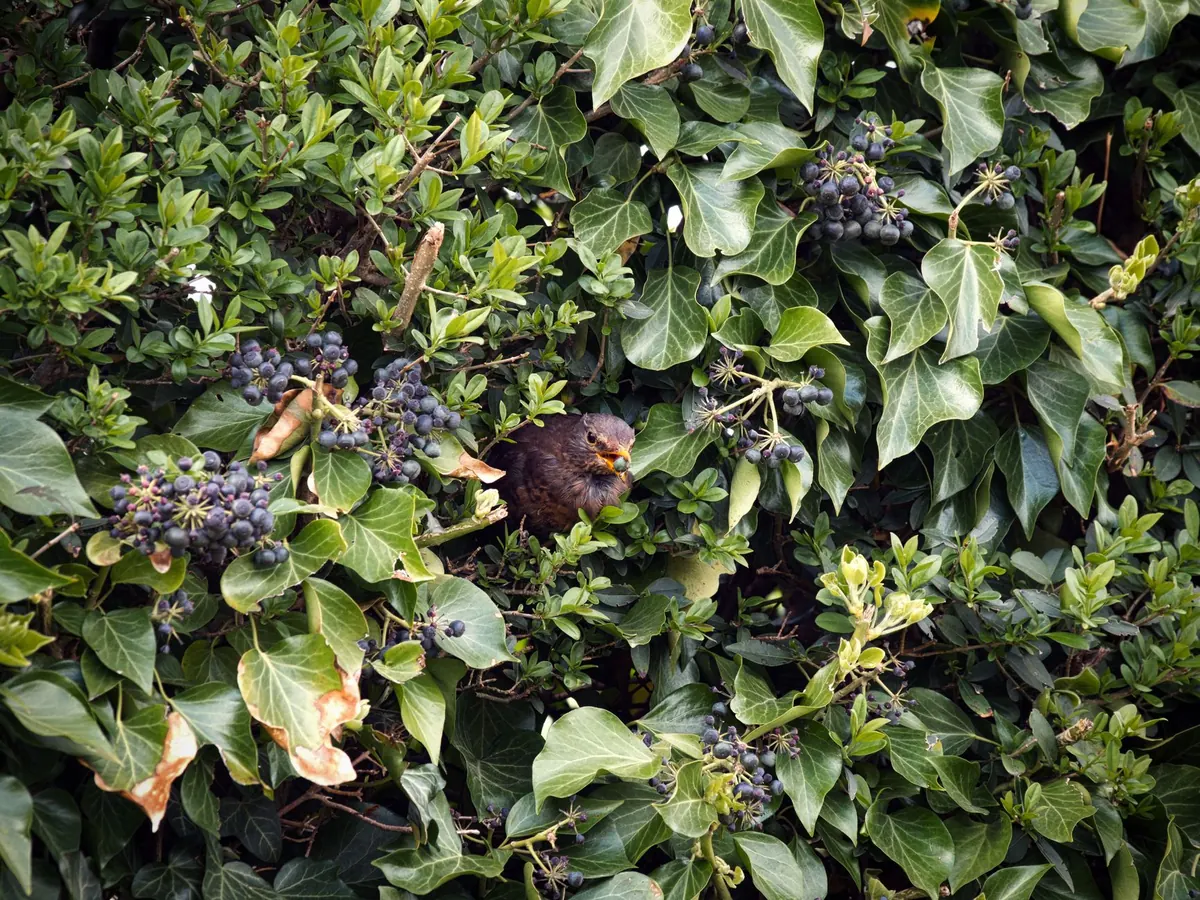
- Let ivy grow on a section if you already have it. Its autumn flowers are one of the best late nectar sources around.
Start Small, Plant This Winter
You do not need a field. Even five metres of mixed native hedge will pull in sparrows, blue tits and the odd hedgehog within a couple of growing seasons, and it will still be working in thirty years' time. Order bare-root plants in autumn for winter delivery, mark out your line with a taut string, and get them in the ground before the soil closes up.
Write down what you planted and roughly where, so you can replace like with like if something fails. Then leave it largely alone. The messier it looks to a tidy-minded neighbour, the more it is doing.
Photo: Christian Himmel / Pexels