A tree is not planted when it comes out of the pot. It is planted once its roots have spread into the surrounding soil, found water on their own and learned to hold the trunk upright against a winter gale. That takes roughly three growing seasons. What you do — or forget to do — during those years decides whether you end up with a sturdy young tree or a stunted stick that never quite gets going.
Aftercare is not complicated, but it is seasonal. The jobs shift as the year turns, and the most common mistakes are ones of timing and quantity: too much water in October, too little in July, a mulch mound piled against the bark, a tie left on for a decade. Here is what actually matters.
Why the First Three Years Are Different
A newly planted tree lives on a small fraction of the root system it will eventually have. Nursery trees are lifted with a compact root ball, so in the first year the roots can only draw water from the soil immediately around them. Until they grow outwards, the tree depends on you.
By year two, roots are pushing into the surrounding soil. By year three they are usually deep and wide enough to cope with a normal British summer. That is the point where you can step back — with the odd exception in drought.
Watering: The Job That Decides Everything
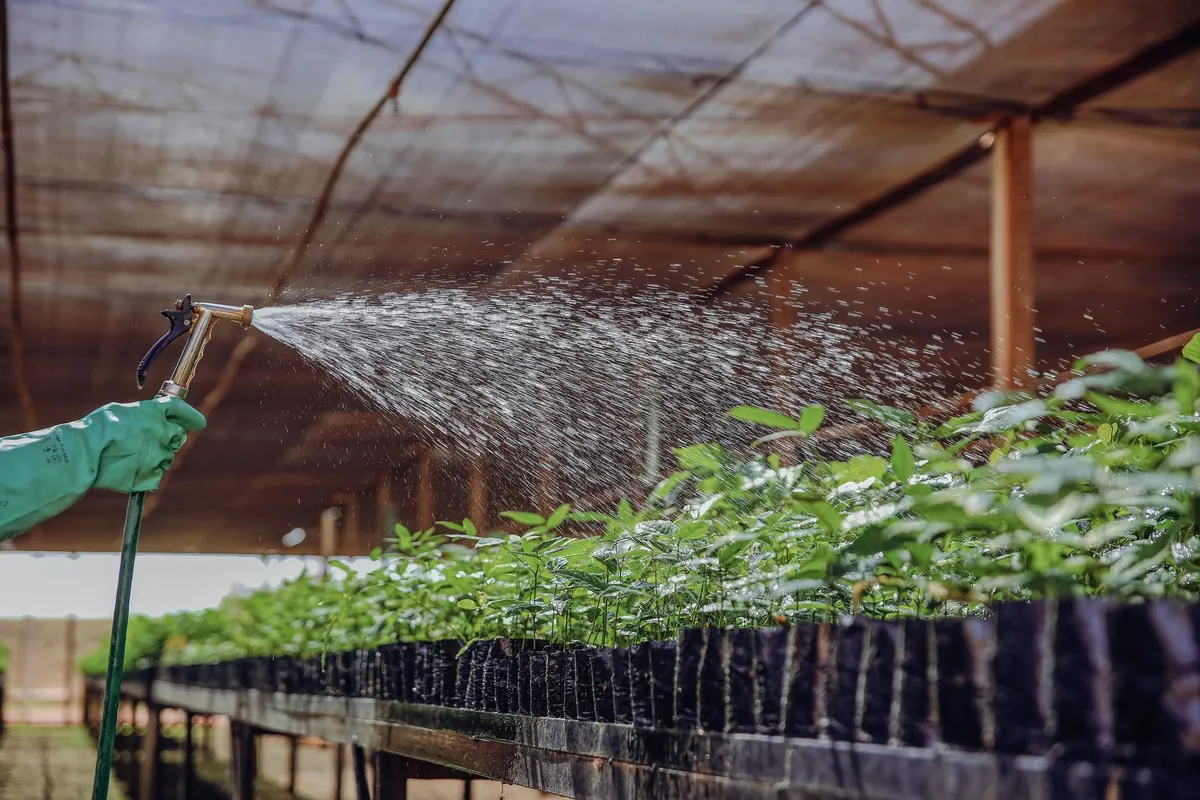
Little and often is the wrong approach. A quick daily splash only wets the surface, encouraging shallow roots that suffer the moment the top few centimetres dry out. A slow, thorough soak once or twice a week is far better, because it pushes water down to where roots are growing.
As a rough guide, a young tree needs around ten to twenty litres a week through the growing season, more on light sandy soil and in hot, windy weather. Sandy soils drain fast; heavy clay holds moisture but absorbs it slowly, so water in stages and let each one sink in.
How to Tell If Your Tree Needs Water
- Push a finger or trowel about 10cm into the soil just outside the root ball. Dry at that depth? Water. Damp? Wait.
- Water at the base, not over the leaves, and let it trickle rather than gush.
- Water around the edge of the planting hole and beyond — that is where new roots are exploring.
- In the first summer, water twice a week during dry spells. Cut back to once a week in year two. In year three, water only in prolonged drought.
- Autumn-planted trees still need watering the following spring and summer. Rain in March does not water a tree in July.
- A leaky hose, or a bucket with a couple of small holes hung beside the trunk, helps water soak in slowly instead of running off.
Mulching: Cheap Insurance Against Weeds and Drought
A ring of mulch does three useful things: it suppresses the grass and weeds that compete for water and nutrients, it slows evaporation from the soil surface, and it keeps soil temperature steadier. Apply a layer about 5–8cm deep across the whole rooting area — a ring roughly a metre across to begin with, wider as the tree grows.
Use well-rotted organic matter, garden compost or bark chip. The one rule that matters is keeping it clear of the trunk: leave a gap of about 10cm so the bark stays dry and air can circulate. Mulch piled against the stem softens bark and invites rot. Top up in spring, when the soil is warm and damp. Never mulch over dry soil in summer — water first, then mulch.
Staking and Ties: Support, Not a Straitjacket
Staking is not automatically good. A tree held rigid cannot flex, and flexing is what builds a strong trunk and anchoring roots. Stake only where it is genuinely needed: exposed, windy sites, bare-root trees, large transplants and anything with a loose root ball.
Where you do stake, use a single sturdy stake for smaller trees, or two either side of the root ball for larger ones, with flexible ties that still allow some movement. Check the ties in spring and autumn. They are the most commonly forgotten job in tree care — a tight tie cuts into the bark and can kill a tree slowly. Remove all stakes and ties after two or three growing seasons, once the roots hold firm.
Pruning in the Early Years
Young trees need very little pruning. The aim is a clean, well-spaced framework of branches and a single strong leader — not a small tree clipped into shape.
In the first year, restrict yourself to dead, damaged or diseased wood, plus any branches crossing and rubbing. After that, thin out competing leaders and remove the lower branches you want to grow clear of, aiming for a clear trunk of around 1.5–2 metres on a standard tree.
Timing matters. Late winter suits most trees, but avoid cutting when the wood is frozen. Cherries, plums and other stone fruits, along with maples and walnuts, are better pruned in late summer, when wounds heal quickly and there is less risk of disease or heavy sap bleeding. If you are unsure, prune lightly in late summer and leave the rest alone.
A Season-by-Season Checklist
Spring
- Check and loosen ties; straighten the stake if it has shifted.
- Top up the mulch ring, keeping it clear of the trunk.
- Start regular watering as growth begins.
Summer
- Water deeply once or twice a week in dry spells — this season makes or breaks a young tree.
- Hoe or pull weeds within the mulch ring.
- Watch soft new growth for aphids and other pests.
Autumn
- Keep watering until leaf fall if the weather stays dry.
- Refirm the tree if wind has rocked it and loosened the roots.
- Check guards and rabbit protection before winter.
Winter
- Do the structural pruning on a mild, dry day.
- Check stakes and ties after storms, and repair any damage.
- Plan next year's mulch and watering routine.
The Three-Year Mark
By the end of the third growing season your tree should be standing on its own roots, holding itself upright and putting on decent extension growth each year. If it is, take the stakes out, ease back on watering and let it get on with it.
If growth has been weak, look at the root zone before reaching for the secateurs. Is the soil compacted? Is grass competing? Was the mulch forgotten, or the watering too shallow in that first summer? Fix the ground and the top of the tree will follow.
One last thing: if your tree sits on a boundary, near a building, or you are thinking about work on a mature tree nearby, check whether it is covered by a Tree Preservation Order or stands in a conservation area before you cut anything. Your local authority planning department can confirm this quickly, and it is worth the phone call.