Type "tree surgeon" into a search engine and you will get firms that also call themselves arborists, arboricultural contractors and tree care specialists. Most of them are good at what they do. But the titles are not quite interchangeable, and knowing the difference means you book the right person for the job — rather than paying a consultant's day rate to chip branches, or asking a climbing team to answer a planning question.
The short answer
Arboriculture is the proper name for the trade: the care and management of trees, hedges and shrubs. An arborist is a professional working in that field. A tree surgeon is a tree worker who carries out the practical, physical side of it — climbing, cutting, rigging and removing.
The overlap is large. Most good tree surgeons are trained arborists, and plenty of arborists spend their days up trees. The useful distinction is between the hands-on work and the advisory work.
What a tree surgeon actually does
If the answer to your problem involves a chainsaw, you want a tree surgeon. Typical work includes:
- Felling small and medium trees, and dismantling larger ones in sections
- Crown reduction, thinning, lifting and deadwooding
- Pollarding, formative pruning and work to a written specification
- Rigging and lowering limbs over sheds, fences, conservatories and parked cars
- Stump grinding and disposal of the arisings
- Hedge reduction, clearance work and storm damage call-outs
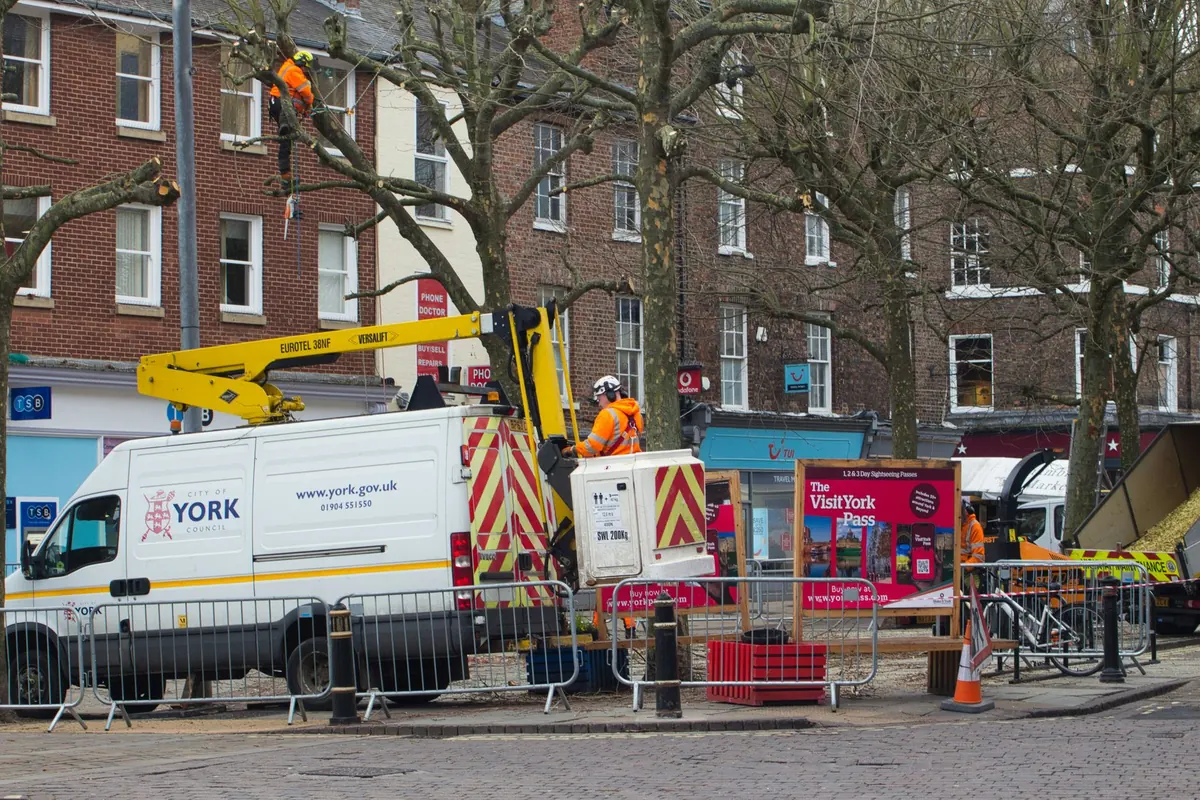
Working at height means ropes, harnesses and a good deal of planning before anyone leaves the ground. Some jobs use a mobile elevating work platform or a crane where access allows. The work should follow a specification based on BS 3998, the British Standard for tree work — so ask what your quote is based on, because "cut it back a bit" means different things to different people. A good tree surgeon will also carry out a risk assessment, check for overhead cables, and ensure the site is safe before starting. They should have public liability insurance and, if they employ others, employers' liability insurance.
Where an arborist goes beyond the chainsaw
A great deal of arboricultural work has nothing to do with cutting. If you need a judgement rather than a haircut, this is the side of the trade you want.
Surveys and tree safety
Arboriculturists inspect trees and record their condition, often using a formal risk assessment system. Schools, housing providers, golf clubs and landowners commission these surveys on a rolling basis. Inspectors working at this level usually hold the Lantra Professional Tree Inspection certificate or an equivalent, and can tell the difference between a defect that needs action now and one that needs watching. For example, a housing association might have a rolling programme of inspections for its communal trees, while a private homeowner might need a one-off survey before buying a property.
Planning and development
If you are applying for planning permission, building an extension, or dealing with a Tree Preservation Order (TPO) or conservation area, you will almost certainly need an arboriculturist rather than a tree surgeon. They produce the reports that local planning authorities require: tree surveys, arboricultural impact assessments, method statements and tree protection plans. These documents explain which trees matter, how construction can avoid damaging them, and what replacement planting might be needed. A tree surgeon can carry out the physical work, but the paperwork and the professional judgement come from the arboricultural consultant.
Similarly, if a tree is protected by a TPO or sits in a conservation area, you cannot simply hire a tree surgeon and start cutting. You need permission from the council, and an arboriculturist can advise on the application and provide the supporting evidence.
Rule of thumb: if the job needs a report, a plan or a legal defence, you need an arborist. If it needs a chainsaw and a harness, you need a tree surgeon.
Qualifications and what to look for
The titles are not protected, so anyone can call themselves a tree surgeon or an arborist. That makes checking credentials essential. Here is what to look for:
- Tree surgeons: NPTC or City & Guilds certificates for chainsaw use, climbing and aerial rescue. They should also carry public liability insurance and, if they have employees, employers' liability insurance.
- Arboriculturists: A relevant qualification such as a foundation degree or BSc in arboriculture, plus professional membership of the Arboricultural Association. For inspection work, the Lantra Professional Tree Inspection certificate is a good sign.
- Both: Membership of a recognised trade body, a clear written quote, and a willingness to explain what they are doing and why.
Don't be afraid to ask for certificates and insurance details. A reputable firm will have them to hand.
When to hire which — practical scenarios
Here are some common situations and who you should call:
- A large branch has fallen on your shed after a storm. You need a tree surgeon, ideally one who offers an emergency call-out service. They will make the tree safe, remove the branch and advise on any further work.
- You want to reduce a tree that is overshadowing your garden. A tree surgeon can do the work, but it is worth asking whether they have arboricultural training. A proper crown reduction to BS 3998 is not the same as a heavy prune.
- You are buying a house with a large oak tree in the garden. You need an arboriculturist to carry out a tree survey and tell you about the tree's condition, life expectancy and any risks. This can be part of your pre-purchase survey.
- You want to build an extension near a protected tree. You need an arboriculturist to prepare an arboricultural impact assessment and method statement for the planning application.
- You have a row of conifers blocking light and want them removed. First check if they are protected. If not, a tree surgeon can fell them. If they are in a conservation area, you may need permission — an arboriculturist can advise.
Cost and value
Tree surgeons typically charge by the day or by the job. Day rates for a two-person team with a chipper can range from £400 to £800 or more, depending on the complexity and your location. Arboricultural consultants often charge by the hour or by the report, with survey fees starting around £300–£500 for a simple domestic job and rising for larger sites.
Paying a consultant's rate for chainsaw work is wasteful, and asking a tree surgeon to produce a planning report is a false economy. Match the professional to the task and you will get better results for less money.
The bottom line
Tree surgeon and arborist are not competing titles; they describe different parts of
Photo: Scott Precious / Pexels